Prove it small, then build it big
"It will go viral" is our hypothesis, so we test it before betting on it. We start with the cheapest thing that could spread, a free auto-driving toy set in Koramangala, and let the numbers decide each next step.
Five steps, each with a gate
- 01
Build in public
NowDevlogs and reels from the real engine and a waitlist to test whether people want it.
Gate Waitlist numbers
- 02
The auto toy
Phase 3A free, five-second-load game: drive an auto through Koramangala, haggle fares, survive the jam and share a clip.
Gate D1/D7 retention, session length, shares per player
- 03
Free beta
Phase 5Prologue + Act I in Koramangala with talkable NPCs. Closed, then open.
Gate Story completion rate
- 04
Launch v1
Phase 6Act II in Indiranagar, the store, the first story area (Majestic) and the in-game shop. First billboard sales.
Gate Area conversion and first ad revenue
- 05
Seasons
Every 4-6 monthsTwo or three new areas per season, story areas first, timed to the city: a monsoon season, a cricket season, Dasara lights.
Gate Each area pays for the next
- 06
Multiplayer
After the story areasAsync social first (ghost races, area leaderboards), then co-op chapters for two to four friends from a link.
Gate Invites per player and co-op retention
How people find it
Being good and being found are different problems. These are the channels, in rough order of cost.
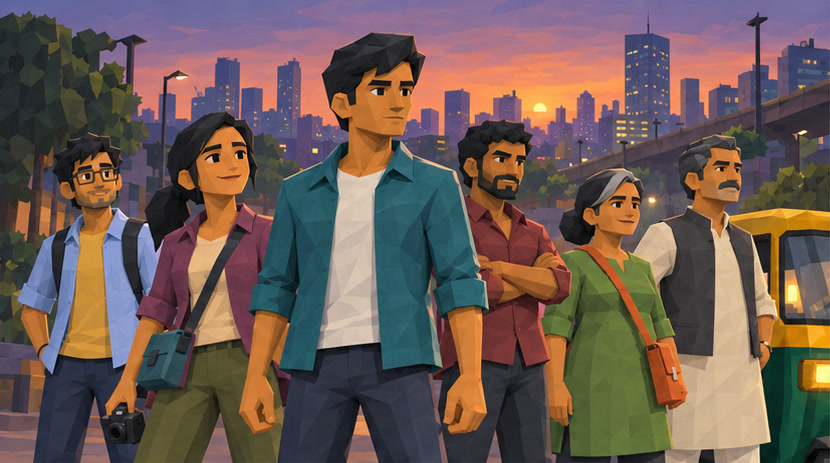
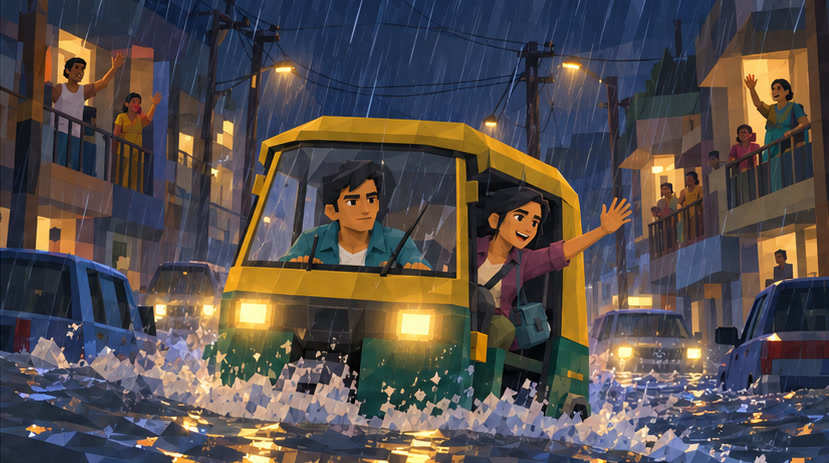
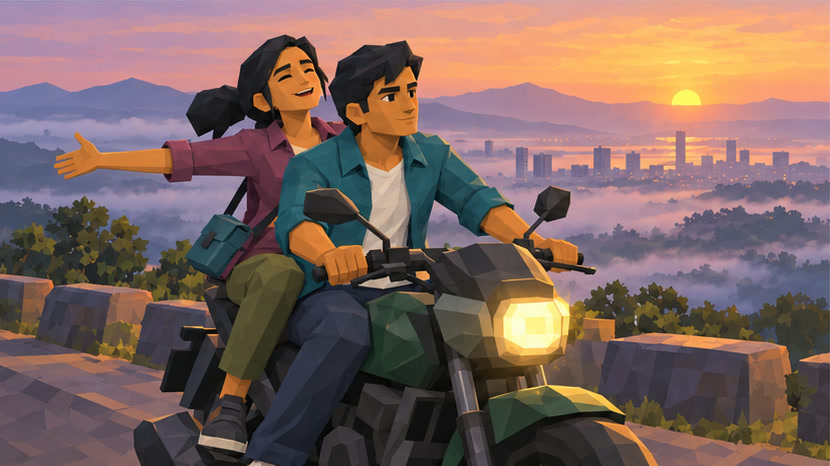
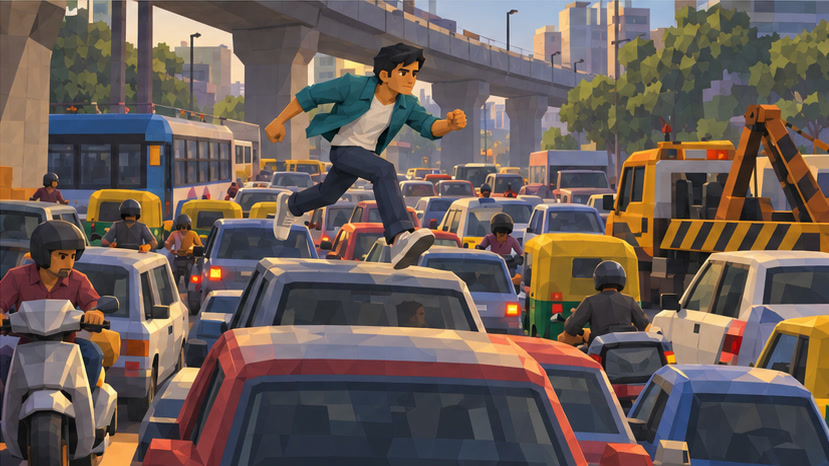
Key art ready for the store page, trailer thumbnails and social posts.
City pride
Bengaluru subreddits, X and Instagram. People share things that show their city back to them.
Creators
Kanglish comedy creators and Bengaluru vloggers play the auto toy on camera.
Colleges
Fest tie-ins and campus ambassadors. The protagonist is a college kid, so colleges are a natural fit.
Startup circles
Founders love satire about themselves. Invite startups to appear as in-game billboards.
Teams
Office game nights and HR events. The desktop browser is the office machine.
Press hooks
"A game that teaches you Kannada" and "a game about Bengaluru's lakes" give local press a story.
Built-in sharing
One-click clips, quote cards from auto chatter, neighbourhood leaderboards and a daily Silk Board challenge.
Where we are
Durations are estimates for one founder working with AI tools. The next phase starts only when the gate is passed.
| Phase | What | Time | Gate | Status |
|---|---|---|---|---|
| Phase 0 | Foundations | 1-2 weeks | An empty scene runs at 60 fps on a public URL | Mostly done |
| Phase 1 | Greybox | 3-5 weeks | Driving is fun for five minutes in grey boxes | In progress |
| Phase 2 | Look test | 4-6 weeks | One dressed junction at 60 fps that looks like the concept art | Started |
| Phase 3 | Viral toy | 4-6 weeks | Real players and retention numbers | Next |
| Phase 4 | Sandbox systems | 8-12 weeks | Gigs, Scene meter, interiors, NPC talk and billboards working | Planned |
| Phase 5 | Story Act I | 8-12 weeks | Closed beta of Prologue + Act I | Planned |
| Phase 6 | Launch and growth | Ongoing | Store, Act II, first ad sales, fundraise on metrics | Planned |
What a sceptic would ask
GTA V cost about $265 million. How can a small team build this?
We are not building GTA V. We borrow its story ambition and ship it in episodes on a simple low-poly look that runs in a browser. Free CC0 asset packs and an AI-assisted pipeline make the art, and each area ships only after the previous one earns. No voice acting at the start, and multiplayer comes later in stages.
95% of Indian gamers play on mobile. Why the desktop browser?
It's a real risk. The desktop gives us better controls and graphics, and it's where office workers and students spend their day, who are the same people startup advertisers want. The code is built to be mobile-ready, and a driving-first mobile mode comes after the retention numbers.
"It will go viral" is an assumption.
Agreed. Bangalore Daze, a Bengaluru auto game on Steam, shows that a good game doesn't automatically get found. So we test virality with a cheap toy before building the story, and the gate numbers decide whether we continue.
Will Indian players pay?
We test early with a waitlist and the free areas. Packs cost about as much as a month of a mobile video plan, UPI makes paying one tap, and there is no app-store cut.
Real places, parody brands and politics: is that a legal problem?
Every brand, party, logo and institution is fictional. There are no real people, no real police insignia and no religious imagery on criminals. We follow a written risk protocol and bring in a lawyer at the first ad sale, fundraise or complaint.
Won't a paywall split the city?
The free game is three complete areas and twenty missions. Gigs there stay free forever. Players pay for more story and new places, never to get past a wall in what they already have. In multiplayer, only the host needs to own an area, so friends can always join.
Top five, in order
- 1The look vs browser performance
- Low-poly art direction, quality tiers and a 60 fps gate before any new feature.
- 2Scope
- One area at a time. Each area must earn before the next one starts.
- 3Distribution
- Test virality with a cheap toy first. Built-in sharing, plus creators and colleges.
- 4Legal and cultural
- Fictional everything, a written protocol, Kannada reviewed by fluent speakers, and a lawyer at the first money.
- 5AI NPC quality and abuse
- AI only for world chatter, never the plot. Guardrails, moderation and a report button.
What we'd love from a mentor
- Is the story strong enough to carry a paid episodic model?
- Is the price right: ₹199 per area, ₹1,999 All-Access and ₹4,999 Lifetime?
- Introductions to two or three Bengaluru startups as founding billboard partners.
- Introductions to Bengaluru creators for the auto-toy launch.
- Which metric to show angels first, and what number would make it convincing?
Back to the start: the world of Namma Uru.
See the world →